Are your investments contributing to deforestation, the global climate crisis or the military industrial complex?
Utilize the resources on this page to learn how to make essential changes that empower you to align your investments with your values!
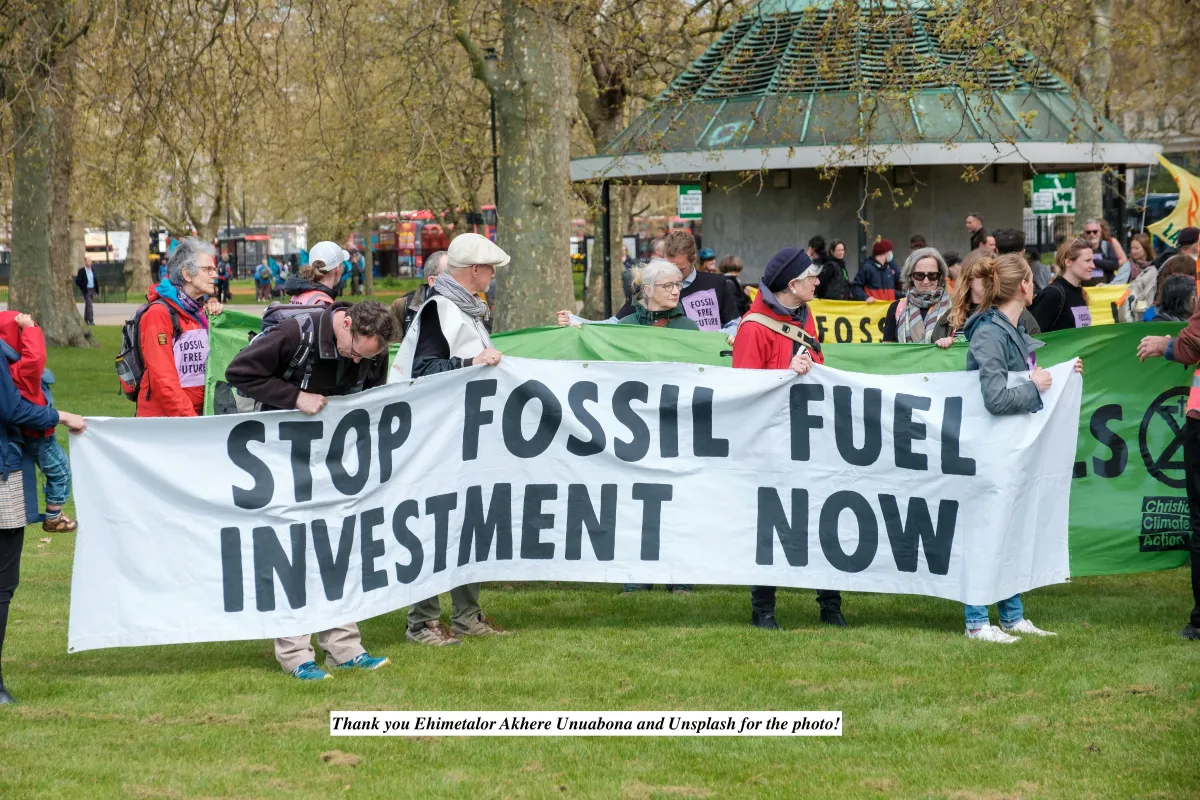
Many Commercial Banks Invest in Fossil Fuels
Is Your Bank Investing In Fossil Fuels?
Empower Your Impact: Redirect Your Investments for a Sustainable Future!
Are you aware of the power your investments and insurance choices hold? It's time to harness that power to drive positive change. Many traditional investment paths may inadvertently support industries that contribute to climate change, deforestation, and other global challenges. But you have the ability to make a difference! By choosing to invest in sustainable and ethical options, you can help reduce reliance on fossil fuels, protect our forests, and promote peace over conflict. Your financial choices can support innovation and sustainability, leading to a healthier planet and a brighter future for all. Let's take action together and ensure our dollars are building a world we can be proud of.
Banks, Investment Tools and Insurance

Credit Unions are an Excellent Alternative to Commercial Banks!
Credit unions are member-owned financial cooperatives that provide traditional banking services. They operate with the primary goal of serving their members rather than maximizing profits. Here's how they generally work:
Membership: To join a credit union, you typically need to meet certain eligibility requirements, such as living in a specific area, working for a certain employer, or being part of an organization. Once you become a member, you're also a part-owner of the credit union.
Not-for-Profit: Unlike banks, credit unions are not-for-profit institutions. This means they return their profits to members in the form of lower fees, better interest rates, and dividends.
Products and Services: Credit unions offer a wide range of financial products and services, including savings accounts, checking accounts, loans, credit cards, and mortgages. They often have competitive rates compared to traditional banks.
Governance: Credit unions are governed by a board of directors elected by and from the membership. This democratic structure means that members have a say in how the credit union is run.
Community Focus: Credit unions often focus on serving their local communities and may provide financial education and support local projects.
Insured Deposits: In the United States, deposits in credit unions are insured by the National Credit Union Administration (NCUA), similar to how the Federal Deposit Insurance Corporation (FDIC) insures bank deposits.
Overall, credit unions are a great option for individuals looking for personalized service and a community-focused approach to banking.

Insurance and the Role it Plays in Global Climate Change
Insurance companies are pivotal in the climate crisis, frequently increasing rates and denying coverage to consumers in regions most impacted by climate change. Paradoxically, they also underwrite policies and insure industrial and commercial fossil fuel mining operations, including oil, gas, and coal; industries that significantly contribute to the crisis. This situation prompts crucial questions: Why are families shouldering the financial burden of these decisions? Why are we being affected by the lack of responsible leadership from insurance companies?
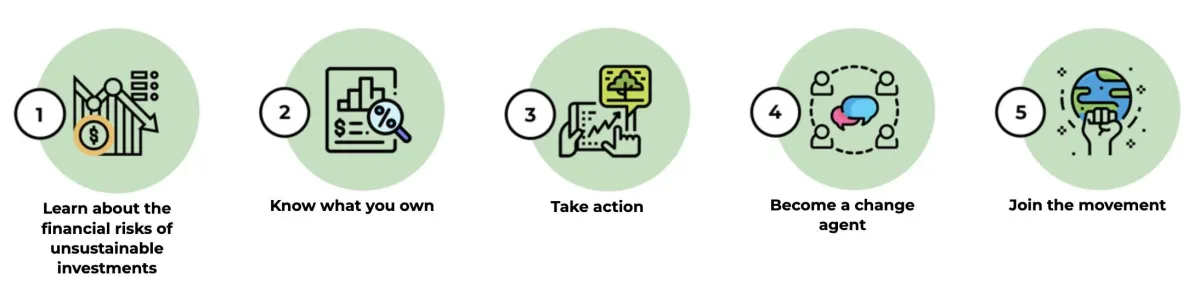
FIVE STEPS TO A SUSTAINABLE RETIREMENT PLAN
Investing in unsustainable options can jeopardize the security of your 401(K).
Your retirement plan may be harming people and the environment.
Know what stocks, mutual funds and other investments that you own.
TAKE ACTION to protect people and the environment.
If your employer is not willing to add sustainable options to your retirement plan, become a change agent!
Join the Movement!

When you join Worthy, you’re not only making an investment in your future, but also in the future of American communities. Worthy bond proceeds are used to provide secured loans to community real estate projects – which help strengthen local economies.
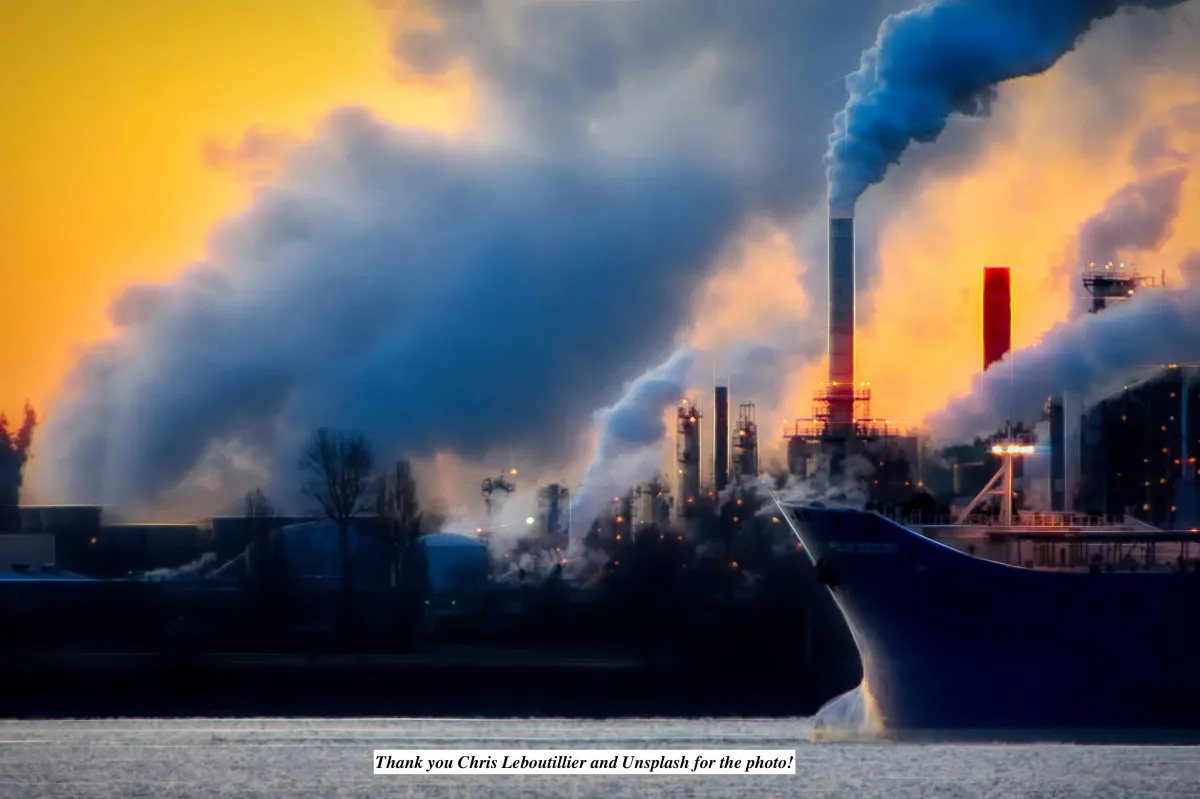
Investments: Is Your 401K Contributing to the Climate Crisis?
To drive significant changes in sustainability and climate mitigation, we must radically transform how we allocate our finances, ensuring our investments align with our values. If you're interested in accessing tools to help you identify where your investments stand, click "Learn More" below.
Climate Action at Your Fingertips: Bold Moves to Shrink Your Carbon Footprint
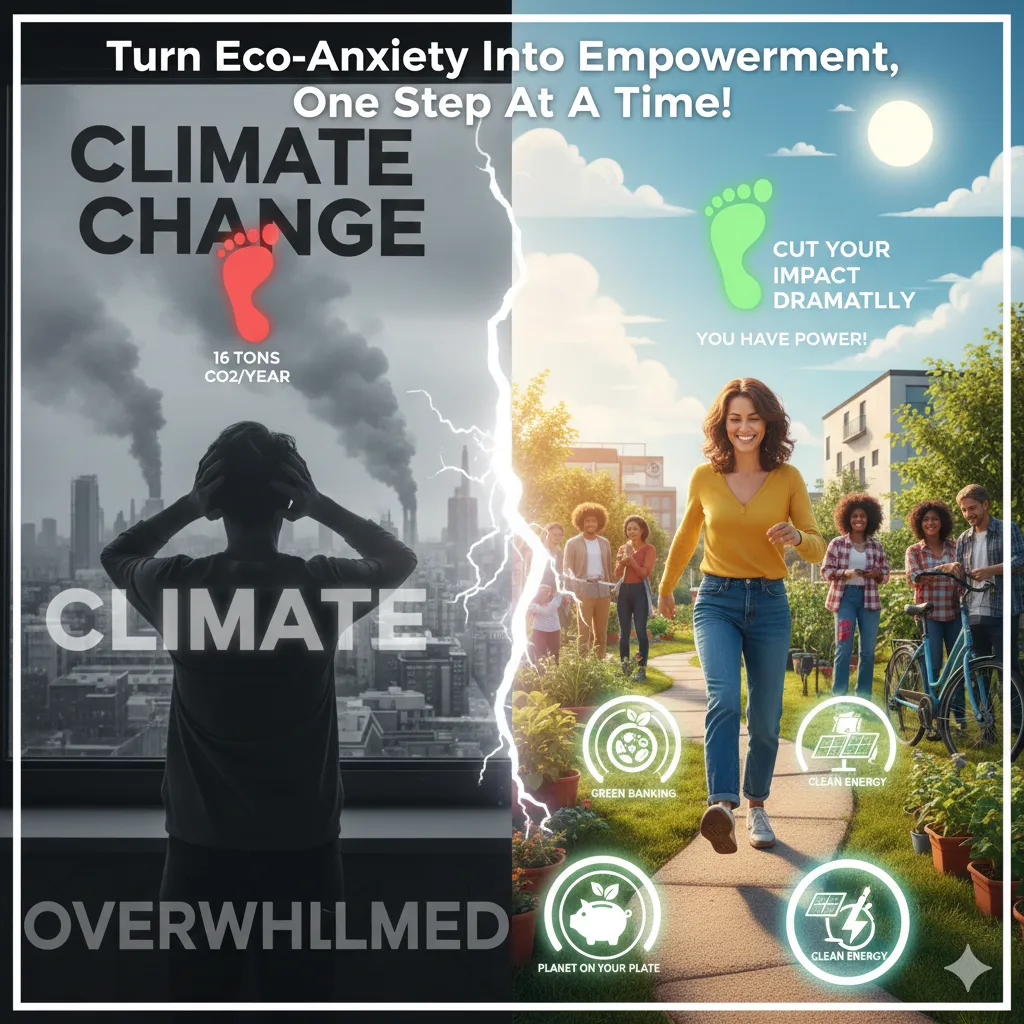
Do you care about climate change but feel overwhelmed by the enormity of the problem? You’re not alone. The good news is you have more power than you think – especially when you align your everyday choices and dollars with your values. By making a few high-impact lifestyle changes, the average American (with a ~16-ton annual carbon footprint) can cut their climate impact dramatically. This guide will walk you through fiercely optimistic and playfully bold actions – from where you bank to what’s on your plate – that pack a punch for the planet. Let’s turn eco-anxiety into empowerment, one step at a time!
Move Your Money to Ethical Banks and Credit Unions
Why it matters: Big banks might be using your deposited money to fund oil pipelines and coal mines – yikes. In fact, since the Paris Agreement in 2015, the world’s 60 largest banks have provided $6.9 trillion in financing to the fossil fuel industry. The six biggest U.S. banks alone accounted for $1.8 trillion of that since 2016. By contrast, ethical banks and credit unions use your money for good – like community development or green energy – instead of propping up the climate crisis. It’s time to give your bank account a green makeover.
How to do it: Start by finding out if your current bank is a climate villain. The annual Banking on Climate Chaos report and BankTrack’s database can show if your bank is financing fossil fuels: fossilfreefunds.org. Many household-name banks unfortunately are. If you discover your bank is part of the problem, switch to a solution. Tools like Bank.Green make it easy to search for sustainable, fossil-free banks in your area: fossilfreefunds.org. Some banks even carry a “Fossil Free Certified” badge, meaning they’ve pledged not to finance new coal, oil, or gas projects. Also consider community-based options: credit unions are fantastic alternatives, since they’re nonprofit, member-owned, and focus on local well-being rather than mega-profitsanthroevolve.com. (As AnthroEvolve notes, credit unions return profits to members and often offer better rates – a win-win for you and the planet.)
Make the switch: Once you’ve picked a greener bank or credit union, the process of switching is not as painful as it sounds. Many provide switch kits to help transfer automatic payments and direct deposits. (Pro tip: keep your old account open for a month or two as you transition, to catch any straggling bills.) Every dollar you move is a vote for clean energy over dirty fossil fuels. In one campaign during COP26, thousands of people shifted their money in a “Swap for COP” movement – showing banks that customers expect better: bank.green. You can join this growing wave of “money activists.” By moving your money, you’re effectively divesting from climate destruction and investing in a sustainable future.
Resources & brands to help: The Global Alliance for Banking on Values (GABV) directory lists mission-driven banks committed to transparency and sustainability. Platforms like Mighty Deposits let you compare banks based on community and environmental impact. Not sure where to start? Green America’s guide “Break Up with Your Mega-Bank” offers step-by-step advice. Some standout ethical banks and credit unions in the U.S. include Beneficial State Bank, Amalgamated Bank, Clean Energy Credit Union, Atmos Financial, and Spring Bank. Each of these institutions makes it their mission to finance solutions, not pollution.
Switch to Green Insurance Providers
Why it matters: Insurance companies are the financial backstop of our economy – and many have been quietly propping up fossil fuel ventures. It’s a frustrating irony: insurers raise premiums or pull out from areas hit by climate-fueled disasters, even while insuring and investing in the coal, oil, and gas projects causing the crisis: anthroevolve.com. Why should our homeowner or auto premiums help bankroll the next oil pipeline? By choosing insurers that don’t underwrite fossil fuels, you send a powerful message and cut off a crucial source of funding for carbon-polluting industries.
How to do it: Research your current insurance companies’ climate stance. Are they listed in campaigns like Insure Our Future (which ranks insurers on fossil fuel policy)? If you find they’re backing coal plants or Arctic drilling, consider switching your home, auto, or renters insurance to providers that align with your values. To find them, check out Green America’s Climate-Smart Insurance Directory, which provides state-by-state lists of insurance companies that avoid fossil fuels. This directory is a goldmine – it grades insurers on whether they insure or invest in fossil fuels and lists only those meeting strict responsible criteria (financially solid and fossil-free.
Green insurance options: A growing number of insurers and insurtech startups are committing to sustainability. For example, Lemonade Insurance (a certified B-Corp) runs a paperless, AI-driven operation and donates unused premiums to charities of the customer’s choice – it even reported cutting its corporate carbon footprint by 54% with a remote-work policy: insurtechdigital.com. Arbella offers a special “green home” policy discount for energy-efficient homes. Some regional mutual insurance companies (often listed in the Climate-Smart directory) explicitly avoid coal and oil risks. The key is to ask your insurer the hard questions: “Do you insure fossil fuel projects? Where are your premiums invested?” If they dodge or admit to dirty investments, you know what to do – make the switch.
Resources to help: Use Green America’s directory greenamerica.org to find greener insurers available in your state. The site even grades their investment in fossil fuels (A, B, C grades) so you can make an informed choice. Another tip: look for insurers that have signed on to net-zero commitments or the U.N.’s Principles for Sustainable Insurance. These commitments aren’t a guarantee of perfection, but they signal an insurer taking climate risks seriously. Finally, spread the word – if your friends or family grumble about rising premiums, let them know they do have a choice. By choosing insurance that doesn’t fuel the climate fire, you’re not only protecting your assets but also the planet.
Divest from Fossil Fuels in Your Investments (401k, Retirement, etc.)
Why it matters: Your 401(k) or IRA might be more tangled up in climate pollution than you realize. Most retirement plans and index funds automatically include fossil fuel companies – meaning your savings could be funding oil drilling, pipelines, and coal plants that jeopardize our shared future: anthroevolve.com. The upside? Shifting your investments is one of the most impactful personal climate actions, magnifying your influence through the power of capital. Plus, it makes financial sense: fossil fuel stocks carry significant climate risk (think stranded assets) and many investors are waking up to this reality.
How to do it: First, know what you own. Use tools like As You Sow’s Fossil Free Funds to see if your mutual funds or ETFs are loaded with coal, oil, or gas companies. Fossil Free Funds is a search platform that helps people find out if their money – in mutual funds or retirement accounts – is being used to extract and burn fossil fuels: fossilfreefunds.org. You can enter your fund or plan name and get a “fossil fuel grade,” plus a breakdown of any dirty energy holdings. Don’t be surprised if a standard S&P 500 index fund has dozens of fossil fuel companies lurking in it. The transparency can be eye-opening.
Next, divest and reinvest. If you have control over your investments (say an IRA or personal brokerage), you can switch to funds that are explicitly fossil-free or invest in clean energy. For instance, Green Century Funds and Parnassus are popular sustainable fund families that avoid fossil fuels. New robo-advisor platforms like Carbon Collective specialize in climate-friendly portfolios – they even offer 401(k) plans for businesses that want to go green. If your employer’s 401k options are limited, don’t be shy: talk to HR about adding a sustainable or ESG fund option. (A whopping 75% of 401k participants want sustainable investing options, though only ~15% of plans currently offer one: kiplinger.commorganstanley.com. Your request can plant a seed for change at your company.)
Some concrete steps you can take today:
Use a fossil-free fund screener: In addition to Fossil Free Funds, check out the Invest Your Values portal, which shows funds free of fossil fuels, deforestation, weapons, and more. You might discover a low-carbon index fund or renewable energy ETF that fits your needs.
Rollover or reallocate: If you have an old 401k from a previous job, consider rolling it into an IRA where you choose the investments (and can then pick fossil-free ones). If you manage a portfolio, reallocate portions from high-carbon sectors to climate solutions (like clean tech stocks or green bonds).
Join the movement: Campaigns like Fossil Free Retirement (by organizations such as Third Act and Green America) provide letter templates and support for employees pushing employers to offer fossil-free options. AnthroEvolve’s page urges people to “TAKE ACTION to protect people and the environment” in their retirement plan: anthroevolve.com – because if your employer isn’t offering sustainable choices, it’s time to become a change agent. Imagine the impact if every company’s 401k went fossil-free!
Resources & suggestions: Add Carbon Collective and Green Century to AnthroEvolve’s investment resources – they’re great examples of platforms helping individuals invest in line with climate goals. Also, Worthy Bonds (featured on AnthroEvolve) is a tool to invest in local community projects (through bonds that yield interest while supporting Main Street, not Wall Street: anthroevolve.com). And remember, divestment isn’t about sacrificing returns – many fossil-free funds perform on par or better than their polluting counterparts, especially as the world shifts toward clean energy. By divesting from fossil fuels, you’re harnessing the power of your purse to fund the future you want – one with a stable climate.
Eat for the Planet: Cut Meat Consumption and Embrace a Low-Impact Diet
Why it matters: What’s on your dinner plate can have a huge climate footprint. Meat (especially beef and lamb) and dairy are among the most carbon-intensive foods, thanks to factors like methane emissions from cows, deforestation for grazing, and the energy used to produce feed. By reducing meat and eating more plant-based, you can significantly shrink your carbon “foodprint.” How significantly? Switching to a plant-based diet can slash an individual’s food-related emissions by up to 1.5–2.1 tons per year (for vegetarian and vegan diets respectively)cleantechnica.com. That’s roughly a 50% drop in diet-related carbon pollution for the average American!
How to do it: You don’t have to go vegan overnight or subsist on kale smoothies (unless you want to). Start with manageable shifts: try “Meatless Mondays” or make one meal a day plant-based. Replace red meat with plant proteins like beans, lentils, or tofu in some of your favorite recipes. Each quarter-pound beef burger you skip saves the planet ~6.5 pounds of CO₂e, plus over 50 gallons of water. If you do eat meat, opt for chicken or sustainably caught fish over beef and lamb – white meats have a much lower footprint. And work more veggies, grains, and fruits onto your plate, ideally seasonal and local when possible (to cut transport emissions and support local farmers).
High-impact changes on your plate:
Cut down beef and dairy: Beef is the biggest offender, with about 20 times the emissions per gram of protein compared to beans. Even cutting your beef consumption in half makes a dent. Try plant-based burgers (Impossible, Beyond, or black bean patties) – they’ve come a long way in taste and texture, with a tiny fraction of the emissions of beef.
Embrace plant-powered meals: Experiment with hearty plant-based recipes that are satisfying and climate-friendly. Think lentil shepherd’s pie, chickpea curries, veggie stir-fries, or good old PB&J. A recent Oxford study found that vegan diets have 75% less climate-heating emissions than high-meat diets – so each meal that’s veg-heavy truly counts. Even a Mediterranean-style diet (lots of veggies, whole grains, olive oil, light on red meat) significantly lowers carbon footprint versus the standard American diet.
Waste less food: Along with eating lower on the food chain, reducing food waste is a part of a low-impact diet. Plan your shopping and use those leftovers – when food rots in landfills it produces methane, a potent greenhouse gas. Plus, wasting food means wasting all the resources and emissions that went into producing it.
Tools & resources: There are apps like My Emissions or the CoolClimate Calculator where you can estimate the carbon impact of your diet and track improvements. For delicious inspiration, platforms such as Meatless Monday (recipes galore) or cookbooks like Plant-Strong can ease the transition. Many meal kit services now offer vegetarian or vegan plans too. If you’re looking for community, try joining local vegan or vegetarian meetup groups – or simply do a family “30-day plant-based challenge” for fun. And for the AnthroEvolve page, perhaps include popular plant-based brands (e.g., Beyond Meat, Impossible Foods) or sustainable food nonprofits like the Cool Food Pledge. The key takeaway: eating for the planet is not about deprivation – it’s an adventure in new flavors that also nourishes a healthier planet.
Drive Change: Choose EVs or Sustainable Transit
Why it matters: Transportation is the #1 source of U.S. greenhouse gas emissions by sector, and the bulk of that comes from personal cars. The typical gasoline car spews about 4.6 metric tons of CO₂ per year (assuming ~11,500 miles at average fuel economy). If you’re able to drive less, carpool, take public transit, or switch to an electric vehicle (EV), you can slice a huge chunk off your carbon footprint. Battery-electric cars produce more than 50% less lifecycle emissions than comparable gas cars – even when accounting for electricity generation and manufacturing. In fact, driving the average EV in the U.S. results in emissions equivalent to a gas car that gets 91 MPG. That’s a massive improvement over the average ~25 MPG gasoline car. In short, cleaner wheels (or no wheels) make a big climate difference.
How to do it: Consider what mix of transportation changes work for your life. Some impactful options:
Swap gas guzzlers for electric: If you’re in the market for a new car, make your next one electric. EVs have gone mainstream – models like the Nissan Leaf, Tesla Model 3, Chevy Bolt, and Ford Mustang Mach-E are common sights. They’re zippy, low-maintenance, and you’ll never buy gasoline again. Over its lifetime, an EV can avoid tens of tons of CO₂ compared to a gasoline car. Every region in the U.S. now sees lower emissions from EVs than gas cars even in areas where the grid still has coal. Bonus: charging on renewable energy (if you have solar or opt for green power from your utility) makes your driving ultra-clean. To shop smart, resources like EnergySage EV Marketplace or PlugStar can help compare EV models and incentives.
Drive less (and enjoy it more): The greenest car is the one you don’t have to drive. Whenever possible, opt for public transit, biking, or walking. Could you commute by train or bus a couple days a week? Work remotely once in a while? Combine errands into one trip? Each avoided solo car trip saves emissions and probably some stress (no one likes traffic). If you live in a city, using transit or joining a car-share (like Zipcar) can sometimes replace the need to own a car at all. And if you’re able to bike, even an e-bike for longer distances, you’ll get exercise and fresh air while cutting carbon. Some U.S. cities are expanding bike lanes and transit options – supporting these initiatives amplifies the impact for everyone.
Maintain and eco-drive: When you do drive, adopting eco-driving habits can improve fuel efficiency (for gas cars) and extend range (for EVs). This means gentle acceleration, maintaining steady speeds, keeping tires inflated, and shedding unnecessary weight. It’s a small win, but it adds up. Also, keeping your vehicle well-maintained (oil changes, etc. for gas cars) ensures it runs as clean as possible.
Resources & brands: To explore electric vehicles, check out Electrify America’s charger network (for road-trip charging) and the DOE’s FuelEconomy.gov site, which now lists EV MPGe and emissions info. Websites like InsideEVs and Plug In America provide tons of consumer info on EV incentives, home charging setup, and more. If an EV isn’t feasible for you right now, consider a hybrid as a stepping stone – or even joining a community carpool or vanpool program (many cities have them, and employers may assist). AnthroEvolve could add a link to a resource like Plug In America’s EV Guide or Carbonfund.org’s commute calculator to help people quantify savings. Bottom line: whether you drive electric or drive less (or both), you’re cutting a major source of personal emissions. Clean commuting is climate activism in motion!
Power Up with Home Solar or Community Solar
Why it matters: Electricity production is another huge slice of our carbon emissions pie. If you power your home with coal- or gas-fired electricity, that’s likely a few tons of CO₂ per year (the U.S. average household electricity use ~10,000 kWh causes about 4-5 tons CO₂ depending on your regional grid). By installing solar panels on your roof or subscribing to a community solar farm, you can offset most or all of those emissions. A typical home solar system can prevent ~5–7 metric tons of CO₂ annually – equivalent to taking 1.5 cars off the road every year. Over 25 years, one home solar setup might avoid up to 175 tons of CO2: residentialsolarpanels.org. That’s a climate impact you can measure in forest acres saved and coal plants unplugged.
How to do it: If you own your home (or even a sunny shed), look into putting solar panels on it. Thanks to a 30% federal tax credit (as of 2025) and various state incentives, solar is more affordable than ever – and financing options mean you can often go solar with zero-down and pay it off with the energy bill savings. Use tools like EnergySage or Solar.com to get multiple quotes from vetted installers in your area. They’ll estimate your roof’s solar potential and how quickly the investment pays back. Many systems pay for themselves in ~7-10 years and then generate essentially free power for another 15+ years. Not to mention, it’s seriously satisfying to watch your electric meter run backwards on a sunny day!
If rooftop solar isn’t an option (maybe you rent, live in an apartment, or have too much shade), community solar is the answer. Community solar gardens are shared solar projects that you can subscribe to, usually for a portion of the energy they produce. You’ll still be supporting clean energy and typically save a bit on your power bill. Check if your utility or state has community solar programs – a site like EnergySage Community Solar can help find projects near you. Another easy option: see if your utility offers a green power subscription (many do, allowing you to pay a tiny premium to ensure your electricity is sourced from renewables like wind or solar). And companies like Arcadia make it simple to enroll in community solar or wind projects if available, no rooftop required.
Beyond solar: Installing solar often goes hand-in-hand with other positive steps, like improving home energy efficiency or adding battery storage. For instance, after going solar you might switch to an electric heat pump or electric vehicle to maximize use of your clean power. Community solar subscribers can brag that part of a solar farm is working for them. Each panel, whether on your roof or in a field, is cleaning up the grid and reducing demand for fossil-fueled power.
Resources & tools: The DSIRE database (Database of State Incentives for Renewables & Efficiency) is a great site to find what solar incentives or rebates exist in your state. Nonprofits like Solar United Neighbors organize bulk-purchase co-ops that lower costs and guide you through the process (highly recommended!). Also consider mentioning Sunrise Movement’s community energy programs or Ikea’s solar offering (in some states Ikea partners to sell home solar). By plugging into solar, you’re not only slashing your own footprint but also helping drive a cleaner electric grid for all. That’s big-picture power from your rooftop!
The Carbon Payoff: Before & After
Let’s pause and see how these high-impact changes add up. The average American at ~16 tons CO₂/yearhas a footprint that breaks roughly into: transportation (~28%), housing/energy (~26%), food (~10-15%), and the rest from goods and services. Now imagine this scenario:
Before: 16 tons – driving a gasoline car (4+ tons), typical diet heavy in meat (2+ tons), standard grid electricity (4-5 tons), money in big banks/investments fueling fossils (an uncounted impact, but let’s acknowledge it), etc. It’s a heavy load, eight times the global per-person average.
After: You move your money to fossil-free banks/funds, meaning zero support for fossil expansion from your dollars. You swap your gas car for an EV (cutting half or more of those 4+ tons You go mostly plant-based, saving ~1-2 tons. You power your home with solar or community renewable energy (cutting up to ~5 tons. Suddenly, your footprint could be on the order of ~8 tons or less – about 50% lower than before! Add in smaller changes and offsets, and you’re even closer to net-zero. The exact math will vary, but it’s not unrealistic that an individual American can halve their carbon footprint through these lifestyle shifts.
While not everyone can do everything (maybe you can’t install solar or don’t have access to an EV charger yet), every major change chips away at that 16-ton footprint. And equally important, these choices drive systemic change: when millions demand plant-based foods, greener investments, and electric cars, industries respond. We start bending the emissions curve downward. So the “after” picture isn’t just your personal footprint – it’s our collective footprint trending toward a sustainable level, thanks to collective action.
Small Changes that Add Up (and Tools to Help)
After tackling the big-ticket items above, you might be wondering: what about the little things? Indeed, smaller lifestyle tweaks may not reduce CO₂ by tons on their own, but they cultivate a mindset of sustainability and do make a difference (especially multiplied across millions of people). Plus, they’re often easy, save money, and have other benefits like less waste or a simpler life. Let’s dive into some meaningful minor changes:
💪 Repair, Reuse, and DIY instead of Replacing: Our throwaway culture drives up emissions from manufacturing new products and creates piles of waste. Next time something breaks, see if you can fix it before reflexively buying new. Mend those jeans, replace that phone battery, glue the chair leg – it’s almost a fun challenge! By extending the life of products, you avoid the carbon footprint of producing a new one. In fact, extending the life of clothing by just 9 months can reduce its carbon, waste, and water footprint by 20–30%. Imagine if we all did that with our wardrobes. To help, check out iFixit.com – a fantastic resource with free repair guides for everything from smartphones to lawnmowers. Many cities also have “Repair Cafés” where volunteers help fix items (and teach you how). Choosing durable, well-made items and supporting companies with repair programs (like Patagonia’s Worn Wear for clothes or Fairphone for electronics) is another way to make repair the norm. And when you truly don’t need something anymore, resell or donate it so someone else can use it – one person’s trash is another’s low-carbon treasure.
👗 Choose Thrift and Secondhand First: Before buying something new, consider if you can find it gently-used. This applies to clothes, furniture, appliances, you name it. By buying secondhand, you’re effectively recycling an item and avoiding the emissions of manufacturing a new one. One study found that reusing 1 kilogram of clothing saves 25 kg of CO₂ emissions compared to buying new – a huge ratio! Thrift shopping is also lighter on your wallet, and it can be a fun treasure hunt. Explore local thrift stores, consignment shops, or online platforms like ThredUp, Poshmark, and Depop for fashion, and Facebook Marketplace, Craigslist, or OfferUp for furniture and other goods. There’s also the Buy Nothing Project – community groups where people give away items for free. You not only cut emissions but also help keep usable items out of landfills. Fast fashion and overconsumption have a massive carbon footprint, so thrifting and buying quality used items is a satisfying way to opt out of that cycle. (Plus, vintage is always in style! 😉)
🚯 Reduce Single-Use Plastic and Waste: It’s not just about carbon – cutting down on plastics and disposables is vital for ecosystem health, and it comes with climate benefits too. Plastics are made from fossil fuels; in 2019, plastic production and disposal contributed 1.8 billion tons of greenhouse gases (3.4% of global emissions). And when plastics sit in landfills, they create methane (landfills account for over 15% of methane emissions in the U.S.colorado.edu). So, reducing waste is a climate win. Start with easy swaps: carry a reusable water bottle and coffee cup, bring your own tote bags to the store, switch to a reusable straw or cutlery kit, and buy in bulk with your own containers when possible. Cut down on packaged foods (your diet and the planet will thank you). Opt for products with minimal or recyclable packaging – or support companies offering refillable and returnable container programs (like Loop store’s reusable packaging system, or cleaners like Blueland and Cleancult that use refill tablets and cartons instead of plastic bottles). For household items, see if there are zero-waste stores or sections in your area – they often let you fill jars with everything from shampoo to spices. And get savvy about recycling and composting to minimize what you send to the landfill. Each piece of plastic you refuse or reuse is a bit less demand for oil and gas extraction. Over time, these choices send a market signal: we want products that don’t trash the planet.
💡 Save Energy at Home (Switch to Cold Laundry, Unplug Devices, etc.): Small habits at home can reduce energy use – which, if you’re on the grid, means lower CO₂ emissions (and a lower utility bill!). Two big opportunities are water heating and “phantom” power load. For laundry, did you know 90% of the energy a washing machine uses is for heating water? Simply washing your clothes in cold water can save a ton of energy. In fact, by washing 4 out of 5 loads in cold, an average household could cut about 864 pounds of CO₂ a year (equivalent to planting 40+ trees)! Modern detergents clean just fine in cold water, and your clothes will last longer too (hot water can fade and wear out fabrics). So dial down that laundry temp – your favorite shirt and the climate will both be happier.
Next, tackle those sneaky energy vampires: many electronics draw power even when “off.” This standby power can account for 5–10% of a home’s electricity use. Think phone chargers, microwaves, game consoles, TVs on standby – sipping power 24/7. The fix is easy: unplug devices or use smart power strips that cut power when devices aren’t in use. For example, plug your TV, sound system, and streaming box into a smart strip; when you turn the TV off, the strip will shut power to the accessories after a short delay. Likewise, unplug kitchen appliances or chargers when not needed. It’s a small effort for decent savings.
Other quick wins: switch lamps and fixtures to LED bulbs (they use ~80% less energy and last years longer), adjust your thermostat a few degrees (especially at night or when you’re out), and weather-strip drafty doors/windows to keep heating/cooling from leaking out. Each of these actions is like picking low-hanging fruit – easy, yet fruitful. And there are apps and devices (like Sense energy monitor) that can help you identify where the most energy is going in your home, so you can target the biggest opportunities.
📦 Buy Less, Buy Better: This is more of a mindset shift than a specific action, but it underpins all of the above. Every product has a carbon footprint from its production and transport. So simply buying less stuff – and focusing on quality, sustainable items when you do buy – is a direct way to shrink your impact. Instead of impulse buys, we can practice mindful consumption: ask if we really need it, or if an experience or borrowed item could meet the need instead. When you do need to purchase, support brands doing the right thing. Look for companies with strong sustainability commitments (certified B Corporations, 1% for the Planet members, Fair Trade or Upcycled materials, etc.), which AnthroEvolve’s marketplace highlights for many product categories. Over time, shifting our spending toward ethical companies creates a ripple effect through the economy. As the saying goes, “Every dollar you spend is a vote for the kind of world you want.” By buying less and buying better, you’re voting for a cleaner, greener world.
(Each of these smaller actions might save a few pounds or hundreds of pounds of CO₂ here and there, but collectively they can save you money, reduce pollution, and create a culture of sustainability in your life. They’re also often gateway habits – once you start reusing bags and washing on cold, you’ll naturally find yourself looking for more eco habits. And when millions join in, the impact multiplies greatly.)
Conclusion: Collective Action, Bright Future
Feeling empowered yet? 🌱 We’ve covered a lot of ground – from moving your money out of destructive industries, to eating yummy plant-based meals, to plugging in solar panels and unplugging appliances. It turns out your everyday choices, especially where and how you spend your dollars, can drive monumental change. Each action is like a vote: a vote for ethical banks over pipeline financiers, for green insurers over climate arsonists, for healthy veggies over factory farming, for clean energy over coal, and for efficiency over waste. When you cast those votes consistently, companies notice. Entire markets transform.
Remember, you don’t have to do it all at once or do it perfectly. Even if you start with one big change – say, switching your bank or cutting out beef – you’re making a real dent in your footprint and sending a message. As you build confidence (“hey, that wasn’t so hard!”), you can tackle the next thing. It’s like leveling up in a game, with the ultimate reward being a livable planet and a values-aligned life.
Most importantly, you’re not alone in this. There’s a growing community of fiercely optimistic folks making these changes alongside you. When you move your money, consider telling friends or posting about it – you might inspire others (peer pressure, but the good kind!). Join local climate action or zero-waste groups to share tips and celebrate wins. Each individual action is powerful, but collectively our actions are world-changing. Picture millions of Americans halving their footprints and demanding sustainable options – that’s the path to the systemic shifts we need, from more renewable energy to better public transit and beyond.
In the face of a warming world, it’s easy to feel overwhelmed. But every time you choose an ethical product, an eco-friendly service, or a low-carbon habit, you prove that we are not powerless. We are, in fact, mighty – especially together. As AnthroEvolve’s philosophy underscores, conscious consumers can change the world, one ethical choice at a time.
So let’s continue evolving, Anthro-style. Let’s wield our wallets, our forks, and our voices in service of a brighter, greener future. The climate challenges are serious, but so are our solutions and our determination. With passion, creativity, and a bit of playful boldness, we can reduce our individual impact and spark broader change. The era of aligning our spending with our values is here – and the planet will thank us.
Here’s to the power of collective action and the hopeful road ahead. Every positive choice is a step toward a stable climate. And step by step, we are walking together into a better tomorrow. 🌎✨
Sources:
Average US carbon footprint ~16 tons: nature.org. Global average ~4 tons (for context).
Big banks financing fossil fuels (trillions since Paris)fossilfreefunds.org
Tools to find sustainable banksfossilfreefunds.orgfossilfreefunds.org.
Credit unions as non-profit, member-owned alternatives: anthroevolve.comanthroevolve.com.
Insurance companies’ role in climate and need for green insurers: anthroevolve.com. Green America’s directory for fossil-free insurers: greenamerica.org.
Lemonade Insurance sustainability exampleinsurtechdigital.com.
Retirement plans and fossil-free investing call to action: anthroevolve.com. Fossil Free Funds tool purpose: fossilfreefunds.org.
Plant-based diet emissions savings (1.5–2.1 tons/year)cleantechnica.com.
Beef vs beans emissions (~20× higher per protein unit)cleantechnica.com.
Vegan vs high-meat diet emissions (75% less)theguardian.com.
EV emissions vs gasoline (50%+ lower lifetime, average EV = 91 MPG gas car equivalent)cleantechnica.com.
Everywhere in US, EVs have lower emissions than gas cars (UCS study)cleantechnica.com.
Home solar CO₂ savings (~5–7 tons/year per home system)residentialsolarpanels.org.
Extending clothing life 9 months cuts footprint ~20–30% phys.org.
Reusing 1kg of clothing saves 25kg CO₂ phys.org.
Plastic production emissions (3.4% of global, 1.8 Gt in 2019)un.org. Plastic in landfills -> 15% of methane: colorado.edu.
Laundry in cold water saves energy (~90% machine energy for heating, 864 lbs CO₂ savings by 4 out of 5 loads cold)washingtonpost.com.
Standby power waste = ~5–10% of home energy use: lifestyle.sustainability-directory.com.
Summary of Building The New Economy: Distributive Capitalism
Distributive Capitalism: Building the New Economy
A "Third Way" for a Fair and Inclusive Economy
Distributive Capitalism (DC) is presented by author David Harlley as a bold successor to traditional capitalism – essentially a “third way” economic model with an explicit mandate to distribute wealth and ownership broadlybuildingtheneweconomy.combuildingtheneweconomy.com. Harlley’s vision arises from the shortcomings of our current system, where capitalism’s tendency to concentrate wealth has led to severe inequality and social strains. Instead of accepting a status quo in which a small owner class holds most assets while others remain wage-earners, DC aims to democratize economic power by expanding ownership to many, tying economic structures directly to human happiness and well-beingbuildingtheneweconomy.com. In the words of one reviewer, Harlley “offers us a third way between the tired tropes of capitalism vs. socialism” and shows how “expanding ownership across the economy can make for a fairer, more resilient, and more vibrant world.”buildingtheneweconomy.com
Harlley positions Distributive Capitalism as a necessary evolution of the market system, especially in the face of 21st-century challenges. He notes that any new economic model must address a spectrum of crises – from social breakdown and extreme inequality to environmental degradation, climate change, political gridlock, and financial instability – all while elevating human potential and well-beingbuildingtheneweconomy.com. DC is explicitly designed with these in mind. By restructuring who owns the economy, it seeks to simultaneously tackle economic injustice, bolster community and worker empowerment, and improve systemic resilience. Harlley believes this reimagined model is essential if capitalism is to remain the dominant organizing principle of the world’s economies going forwardbuildingtheneweconomy.com. In other words, Distributive Capitalism is presented not as a fringe idea, but as the future of capitalism itself, one that can steer the economy toward sustainable prosperity for all.
Core Principles of Distributive Capitalism
At its heart, Distributive Capitalism is about rebalancing the economic system so that ownership and prosperity are widely shared rather than concentrated. Harlley outlines several core principles – essentially pillars of the DC model – that define how this new economy would function.
These key pillars are:
Broad-Based Employee Ownership: The first pillar of DC is the vast expansion of ownership to workers within businesses. Harlley argues that rather than eliminating private ownership (as in communist models), the solution is to “create more owners, not fewer.” In fact, he contends that capitalism will only truly thrive if “we must all become capitalists, we must all become owners” – otherwise the system inevitably produces undesirable social outcomesbuildingtheneweconomy.com. Practically, this means promoting employee ownership on a broad scale, so that workers have a significant stake in the companies they help build. In a DC framework, employees would share in equity and profits, whether through direct stock purchases, worker cooperatives, or trusts like Employee Stock Ownership Plans (ESOPs) that hold shares on behalf of employeesbuildingtheneweconomy.com. Harlley notes that genuine employee ownership often comes with a voice in governance (e.g. board representation for employees), giving workers real agency in decision-makingbuildingtheneweconomy.com. This widespread worker stakeholding is intended to anchor companies in the interests of their people and communities, blending the dynamism of capitalism with the ethos of economic democracy.
Proliferation of Small Enterprises (Inclusive Entrepreneurship): The second pillar of Distributive Capitalism is a thriving landscape of small and medium-sized businesses. DC calls for nurturing an economy with far more independent and employee-owned enterprises, as opposed to one dominated by a handful of giant corporations. Encouraging inclusive entrepreneurship spreads ownership (and opportunity) to a greater number of people and communities, countering the monopolization tendencies of mature capitalism. A larger population of small firms provides healthy competition, consumer choice, and variety in the marketbuildingtheneweconomy.com. Harlley points out that many modern industries tend toward a “fat head” of a few big winners with outsized success, while smaller players struggle – but a vibrant economy needs the rich “long tail” of many moderate-success firms as wellbuildingtheneweconomy.com. He uses an ecosystem analogy: just as a thriving rainforest requires a diverse undergrowth and not only a single canopy of giant trees, a thriving economy “needs both the large and the small” businesses to remain healthy, diverse, and resilientbuildingtheneweconomy.com. By lowering barriers to entry and supporting small enterprises, Distributive Capitalism seeks to decentralize wealth creation, ensure innovation isn’t stifled, and give local communities more control over their economic destiny.
Anti-Monopoly and Fair Competition: The third pillar of DC centers on robust antitrust policies and limits to excessive corporate concentrationbuildingtheneweconomy.com. While Distributive Capitalism doesn’t reject the idea of business growth or economies of scale outright, it insists that unchecked bigness often comes at a high cost to society. Mergers and acquisitions are not viewed as neutral events; they can concentrate power in ways that hurt consumers, workers, and innovation. Harlley argues that governments should actively restrain corporate consolidation “via a robust antitrust infrastructure,” ensuring no merger or expansion is approved if it likely disadvantages the public or the broader economybuildingtheneweconomy.com. Even organic corporate growth has trade-offs: as companies become behemoths, we often see reduced consumer choice, potential price-gouging or collusion, outsized lobbying power, and systemic risks when a massive firm failsbuildingtheneweconomy.com. DC therefore advocates vigilance against monopolies and oligopolies. By breaking up or preventing monopolistic dominance, the playing field stays open for newcomers and smaller competitors – reinforcing the second pillar’s goal of a diverse enterprise landscape. This principle realigns the market with its competitive ideals and protects society from the instability that can arise when “too big to fail” corporations hold all the cardsbuildingtheneweconomy.com.
Distributed Local Economies: The final pillar of Distributive Capitalism is the geographic decentralization of economic activity, which might be termed a “distributed economy.” Harlley observes that not only does wealth concentrate in a few hands under the current system, but productive activity also tends to concentrate in certain regions, leaving other areas economically hollowed outbuildingtheneweconomy.com. DC aims to counter this by strengthening local and regional economies rather than allowing all industry and talent to cluster in a few metropolitan centers or countries. In practice, this means supporting diverse local industries so that communities are not overly reliant on just one or two big employers or sectors (a lesson drawn from the decline of one-industry towns or “rust belt” regions). It also means encouraging localized production and supply chains where feasible. Harlley notes that modern trade and industrial trends have favored heavy centralization, but this comes with vulnerabilities and environmental costs – transporting goods over long distances contributes significantly to greenhouse gas emissions and climate changebuildingtheneweconomy.com. By contrast, increasing local production and self-reliance can reduce the carbon footprint of the economy (by shortening supply lines) and make local communities more resilient to global shocksbuildingtheneweconomy.com. The recent rise of remote work technology is one example that DC embraces: it allows talent and jobs to be more widely distributed geographically, reviving smaller towns and spreading income away from just the big cities. Overall, this pillar envisions an economy that is more balanced across regions, less vulnerable to the collapse of any single hub, and better for the planet. In Harlley’s distributed economy, prosperity would not be a geographically isolated phenomenon but shared by urban and rural areas alike – reinforcing the notion of an economy that works for everyone.
These four pillars collectively illustrate how Distributive Capitalism would “democratize” the marketplace itself. The overarching idea is to take capitalism’s engine of innovation and productivity, but reconfigure its ownership and scale dynamics so that it benefits the many rather than the few. Harlley firmly believes that an economy owned broadly by its participants will naturally function in the interests of the public; when people have a real stake and voice, the economy becomes more equitable and humane by designiebookcatalogue.ie.edu. In short, DC’s principles are about embedding economic justice, inclusion, and long-term resilience into the very structure of the market.
Practical Pathways to Implementation
Translating Distributive Capitalism from vision to reality would require concerted effort on multiple fronts. Harlley acknowledges that each of the DC pillars calls for specific mechanisms and policy innovations to advance itbuildingtheneweconomy.com. No single reform can achieve this paradigm shift; rather, a combination of legal, financial, and cultural changes will be needed to build the new system. Some practical pathways and changes proposed (or implied) by the DC framework include:
Employee Ownership Programs: Create and expand mechanisms that facilitate workers becoming co-owners of their companies. This can include promoting Employee Stock Ownership Plans (ESOPs) – where a trust buys company shares for employees – as well as encouraging the formation of worker cooperatives and other broad-based share ownership schemesbuildingtheneweconomy.com. Governments could incentivize these models via tax breaks, grants or loans for employee buyouts, and legal structures that make transitioning to employee ownership easier. The goal is to normalize a culture in which employees at all levels have an equity stake. Harlley draws inspiration from pioneers like Louis Kelso (who developed the ESOP concept) in treating employee ownership as a powerful tool to distribute wealth without sacrificing firm performance. By giving workers a real share of profits and governance, these programs turn jobs into sources of wealth-building and agency for individuals and communities.
Support for Small and Medium Businesses: Make policy and financial support for small enterprises and startups a priority. This involves improving access to capital for new entrepreneurs (for example, through public investment banks, community finance, or impact investment funds like Harlley’s own ThirdWay Capital). It also means cutting red tape that disproportionately burdens small firms and providing training or incubators for local business development. Inclusive entrepreneurship is a key theme – ensuring that people from all backgrounds (not just those with existing wealth) can start and own businesseshispanotech.ca. By seeding many more locally owned enterprises, wealth can spread more evenly. These businesses in turn create local jobs and reinvest in their communities, reinforcing a virtuous cycle of distributed prosperity. Harlley emphasizes that a DC-oriented economy would celebrate the “small business owner” as a central figure of growth, not just the corporate conglomerate. Over time, a dense network of small and mid-sized firms can provide the same services and innovations as a few giants – but with far more ownership points, competition, and community alignment.
Strengthening Antitrust Enforcement: Implement robust anti-monopoly regulations to prevent excessive concentration of market power. Practically, this means empowering regulators to block mergers or break up companies when a business combination would harm consumers, workers, or the competitive landscapebuildingtheneweconomy.com. Antitrust laws may need updates to address new economy issues (for instance, tech platform monopolies or the effects of private equity consolidation). DC advocates for viewing monopolistic growth with skepticism and intervening decisively to maintain a level playing field. This could involve reinstating stricter standards for approving corporate mergers, limiting how much market share a single company can control in critical sectors, and monitoring dominant firms for anti-competitive behavior. The philosophy is that no entity should become “too big to fail” or so powerful that it can dictate market terms. By capping bigness, these measures ensure space for smaller competitors and protect the public from abuses of concentrated power. In a DC implementation, antitrust is not a relic of the past but a vital, continually enforced guardrail that keeps capitalism fair and open.
Localism and Regional Development: Pursue policies that decentralize economic activity geographically and bolster local economies.
For example, national and local governments can invest in infrastructure and education in underdeveloped regions to attract businesses and talent outside of the usual economic hubs. Incentives could encourage companies to set up operations in smaller cities or rural areas – or to allow remote work – rather than forcing all economic activity into expensive metropolitan centers. Another strategy is to promote localized production: for instance, supporting local agriculture, manufacturing, and energy projects that reduce reliance on long-distance supply chains. Not only does this create local ownership and jobs, it also has sustainability benefits: producing goods closer to where they are consumed cuts down on transportation emissions and pollutionbuildingtheneweconomy.com. Communities can be encouraged to be more self-sufficient in essential goods, which increases resilience to global supply shocks. Moreover, fostering regional economic diversity (so that an area isn’t tied to a single industry or employer) can prevent the kind of collapse seen in one-company towns. In a DC framework, every community is empowered to develop its own vibrant economy, connected by trade but not utterly dependent on distant corporate centers. Over time, this would lead to a more balanced and sustainable development, as prosperity is shared across the map.
Implementing Distributive Capitalism clearly requires a mix of grassroots initiatives, enlightened business leadership, and supportive public policy. Harlley notes that there is “much work to be done at the policy level, and then subsequently legal, financial and tax levels” to enable these pillars in practicebuildingtheneweconomy.com. This could range from rewriting corporate laws to favor stakeholder ownership, to adjusting tax policies (for example, taxing capital gains and labor income more equally, or giving tax credits to employee-owned firms), and reorienting financial systems to fund broad-based ownership models. While the exact policy menu will vary by country and context, the common thread is creating an ecosystem where distributed ownership can flourish. Harlley’s book delves into examples like employee ownership in the United States (with several chapters focusing on how ESOPs have worked in practice), as well as case studies of small-business driven economies, to illustrate that these ideas are not utopian but viable when thoughtfully implementedbuildingtheneweconomy.combuildingtheneweconomy.com. The path to DC might be complex, but the destination is compelling: a rebalanced economy that generates wealth and shares it broadly, by design.
How It Differs from Traditional Capitalism
Distributive Capitalism is founded on the recognition that traditional late-stage capitalism has inherent flaws which DC seeks to fix at a systemic level. One of the starkest differences is in how each system handles the accumulation of wealth. In today’s mainstream capitalism, wealth naturally concentrates in the hands of those who already have capital – an outcome driven by mechanisms like compound returns on investment. Harlley illustrates this with a simple scenario: imagine one person with $1,000,000 in capital and another with $10,000; if both invest at the same rate of return, the gap between their wealth will widen dramatically over timebuildingtheneweconomy.com. Indeed, absent shocks or interventions, capital grows faster for the rich than for everyone else, leading to an ever-expanding gulf in wealth and powerbuildingtheneweconomy.com. This dynamic has been observed by economists like Thomas Piketty and is borne out in rising inequality across many capitalist economies. Traditional capitalism has typically addressed this only after the fact – through taxes, redistribution, or social safety nets – or often not at all, resulting in severe disparities.
Distributive Capitalism, by contrast, aims to bake equity into the system’s core. Rather than relying on government redistribution to correct extreme outcomes, DC proposes structuring the economy upfront so that wealth is created and distributed simultaneously. By making workers into owners and proliferating smaller enterprises, DC would dramatically reduce the initial concentration of income and assets. The classic capitalist divide between an “owner class” and a “worker class” is blurred or eliminated – most people would be both workers and owners to some extent. Harlley emphasizes that this is crucial for capitalism’s long-term viability: if only a tiny elite owns productive assets, the rest of society will justifiably feel disempowered and the system faces crisis. In his view, everyone must become an owner in some form, or else capitalism will “result in undesirable social outcomes” and potentially collapse under its own inequitiesbuildingtheneweconomy.com. DC therefore fundamentally challenges the trickle-down assumption of traditional capitalism. It reallocates economic rewards and decision-making rights across a broad base of participants, rather than channeling most gains to shareholders at the top.
Another difference lies in democracy and accountability. In a conventional capitalist firm, decisions are made by a combination of managers and a board representing shareholders’ interests – and typically, those shareholders are a small group of wealthy investors. Workers and communities impacted by the firm have little say. This can lead to decisions that prioritize short-term profit over employee well-being, community health, or the environment. Under Distributive Capitalism, with employees and local stakeholders becoming significant owners, the governance of companies would likely shift to be more responsive to a wider set of interests. Harlley and others argue that true political democracy is undermined when the economy itself is undemocraticlinkedin.com. DC’s answer is to democratize the marketplace: when people have ownership stakes and voice in the businesses that affect their lives, economic decision-making becomes more participatory and aligned with the public good. In essence, DC extends the principles of democracy from the political realm into the economic realm, whereas traditional capitalism confines power to capital owners and asks the rest of society to influence outcomes only indirectly (through labor unions, government lobbying, or consumer choice).
Additionally, Distributive Capitalism is portrayed as more resilient and sustainable than the current model. Traditional capitalism’s drive toward bigness and centralization can lead to brittle systems (for example, a single mega-bank failure threatening the entire economy, or entire regions collapsing when an industry leaves). It also often externalizes environmental costs in the pursuit of growth. DC, by intentionally limiting concentration – through anti-monopoly measures and distributed local production – creates a more redundant, robust network of economic actors, much like a ecosystem with many interdependent yet independent parts. This reduces “too big to fail” risks and spreads out shocks. Moreover, because DC prioritizes long-term community wealth over short-term profit maximization, it naturally weighs social and ecological factors more heavily than traditional capitalism tends to. For instance, a worker-owned company is less likely to pollute the town river that its employee-owners and their families drink from, compared to an absentee-owned corporation with no local stake. In summary, conventional capitalism often pursues profit at the expense of equality, democracy, and sustainability, and then tries to patch the side effects, whereas Distributive Capitalism redesigns the system upfront so that fairness, participation, and sustainability are built-in outcomes of economic activity.
Relationship to Cooperatives and Other Models
It’s important to clarify how Distributive Capitalism compares to other alternative economic models, particularly the cooperative movement, which also seeks to democratize economic power. DC shares a philosophical kinship with cooperativism – both envision an economy where workers and community members have greater ownership stakes and decision-making power. In fact, worker cooperatives (businesses owned and run by their employees) are one of the key mechanisms embraced within Distributive Capitalism. Harlley explicitly cites worker co-ops as an example of broad-based employee ownership, noting that some companies achieve employee ownership via direct purchase of shares by workers (the cooperative model) as opposed to via a trust like an ESOPbuildingtheneweconomy.com. In this way, cooperatives are part of the toolkit of DC and exemplify its first pillar in action – proving that firms can succeed while being owned by their employees. The values of democracy, solidarity, and equitable reward that cooperatives uphold are very much in line with DC’s ethos.
However, Distributive Capitalism is not limited to cooperatives, and this is a crucial distinction. Whereas cooperatives (and the broader solidarity economy) often grow as a parallel alternative to mainstream investor-owned firms, Harlley’s concept of DC is a more expansive reimagining of the entire economy. It doesn’t require every business to be a cooperative in the traditional sense; rather, it encourages a variety of models that all result in distributed ownership. For example, a publicly traded corporation might practice Distributive Capitalism by allocating a large block of its shares (say 30% or more) to an employee ownership trust and giving workers voting rights – even if the company isn’t 100% worker-owned or structured as a coop. Likewise, a family-owned small business under DC might ensure that when it grows, it brings in employees as co-owners rather than seeking only outside investors. The common thread is broad participation in ownership, but the form can range from classic co-ops to ESOP companies, mutual enterprises, community-owned projects, or hybrids thereof. DC is thus best seen as an umbrella framework that integrates cooperative principles into a market economy at large. It seeks to mainstream those principles, rather than keep them in a separate cooperative sector.
Another point of contrast is governance and scale. Cooperatives typically operate on the principle of one-person-one-vote and often cap returns on capital to prioritize member needs; they also tend to remain relatively small or medium-sized (since very large democratically run organizations can be complex to manage). Distributive Capitalism, on the other hand, does not prescribe a single governance rule like one-person-one-vote for all enterprises – some DC-aligned firms might use proportional voting shares, for instance, as long as ownership is widespread. The focus is less on the internal cooperative governance model and more on the outcome of who holds the economic rights. This means DC can potentially be applied to larger enterprises by altering ownership structures without necessarily converting them fully into cooperatives. Harlley’s approach thus tries to blend the efficiency and scalability of markets with the fairness of cooperative economics. It’s a recognition that cooperatives alone, while admirable, have not yet overtaken corporate capitalism; DC aims to inject cooperative DNA into the broader capitalist system itself so that even conventional companies behave more like cooperatives in how they share wealth and power.
In relation to other models: one could say Distributive Capitalism echoes aspects of “distributism”, a philosophy from early 20th-century Catholic social thinkers (like G.K. Chesterton) who argued for widely distributed property ownership. Harlley indeed draws on a lineage of ideas suggesting that widely distributed private property (as opposed to either concentrated capitalism or state socialism) is the basis of a just economylinkedin.com. DC updates this for the modern era, showing practical ways to achieve it. Unlike socialism, DC does not advocate state control of industry or the abolition of markets; it stays firmly on the side of private enterprise and market competition, but with the crucial twist that those enterprises are owned by many hands. Harlley contrasts DC with communism by asserting that communism’s approach – removing the owner class entirely – “was tried and found wanting,” whereas DC’s approach is to make everyone an owner and thereby align capitalism with the interests of the majoritybuildingtheneweconomy.com. In summary, Distributive Capitalism can be seen as complementary to the cooperative movement and other people-centered economies, but with a broader structural vision. It seeks to reform capitalism from within, turning it from a system that enriches a few into one that empowers the many, all without discarding the incentives and freedoms that a market economy provides.
Toward a Sustainable and Empowering Economy
Distributive Capitalism, as outlined by David Harlley, is ultimately a vision of an economy that is equitable, resilient, and deeply human-centered. It aligns economic incentives with the common good by ensuring that the people driving businesses and communities forward are the ones who share in the wealth created. This model speaks to a sustainability-minded audience in clear terms: it proposes an economy where social justice and environmental care are built-in features, not afterthoughts. By broadening ownership, DC would inherently reduce extreme inequality and give individuals a stake in long-term outcomes, fostering a sense of responsibility for sustainable practices (people tend to protect what they own). By localizing and diversifying economic activity, it would strengthen communities against external shocks and encourage stewardship of local resources. And by reining in monopolistic excess, it would help realign economic growth with human values, preventing profit-at-any-cost scenarios that harm society or the planet.
Harlley’s work is suffused with an empowering tone – it is about giving ordinary people agency in the economy. Instead of viewing workers or citizens as passive participants subject to market forces, Distributive Capitalism invites them to become co-creators of prosperity. It suggests that human dignity in work and enterprise can be restored by making everyone, in some fashion, an owner with a voice. This is a hopeful message for those who have grown disillusioned with business-as-usual capitalism yet are not satisfied with statist or collectivist solutions. It says we can keep the creativity and freedom of markets, but reshape the outcomes so that markets serve humanity, not the other way around. As Harlley puts it, Distributive Capitalism represents “a major step towards a world that works for all.”iebookcatalogue.ie.edu It is a call to build a new economy where wealth is shared, power is distributed, and prosperity is sustainable – in short, an economy that truly puts people and planet first, without sacrificing innovation or productivity. For advocates of cooperative economics and sustainability, this vision is both familiar and fresh: it builds on long-standing ideals of fairness and community, and channels them into a framework for transforming the economic mainstream. The result is an inspiring and actionable blueprint for the future – one where the marketplace is humanized and economic life is oriented toward the flourishing of all people.
Sources:
David Harlley, Building The New Economy: Distributive Capitalism – Book overview and excerptsbuildingtheneweconomy.comiebookcatalogue.ie.edubuildingtheneweconomy.combuildingtheneweconomy.combuildingtheneweconomy.combuildingtheneweconomy.combuildingtheneweconomy.combuildingtheneweconomy.combuildingtheneweconomy.com
Denise Hearn, commentary on Distributive Capitalism (book praise)buildingtheneweconomy.com
Event description, IE University & Hispanotech (Montreal) – “Redefining Capitalism: Distributive Capitalism” Masterclasshispanotech.ca
Distributive Capitalism sample chapters (via buildingtheneweconomy.com)buildingtheneweconomy.combuildingtheneweconomy.com
“Green Growth” Is Not Coming To Save Us. But Our Purchases Still Matter.
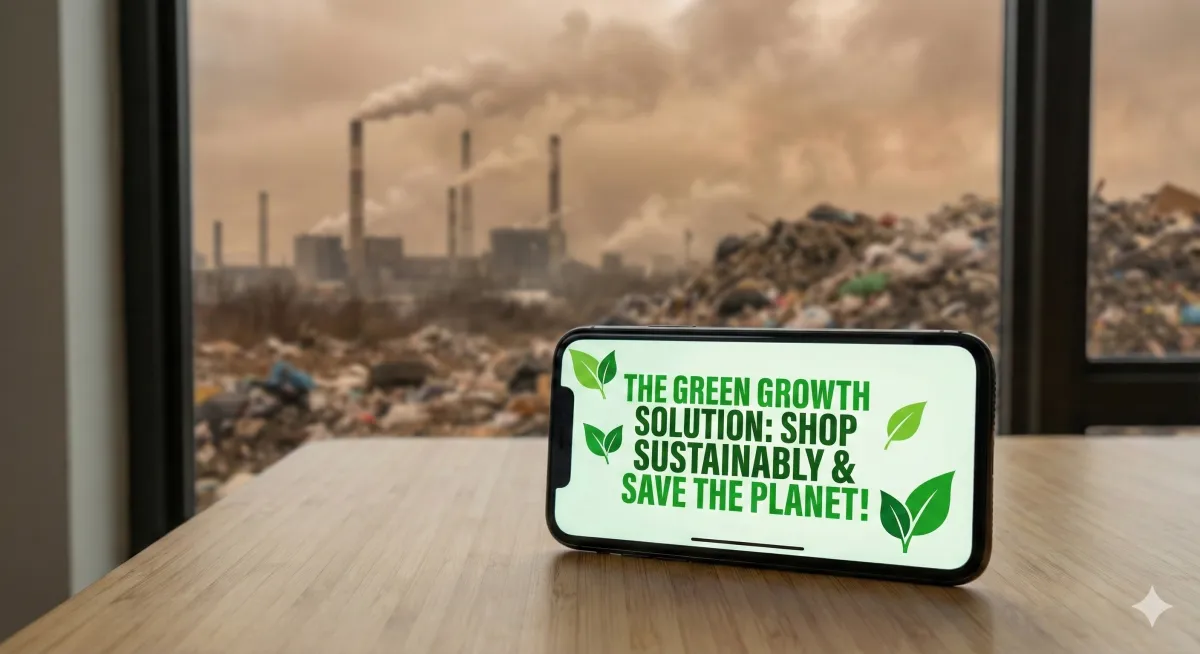
Periodically, a viral wave insists that “green growth” is the fix for our consumer culture and mounting waste crisis.
Barbara Williams calls it what it is: a fairy tale for adults who’d rather dodge the numbers than deal with reality.
The details change, but the core message is always the same: you cannot have endless economic expansion on a finite planet and expect the biosphere to cooperate.
That claim is not ideological. It is arithmetic.
For decades, economists and policymakers have promised that we can “decouple” GDP from environmental damage, that efficiency and innovation will let us grow the economy while shrinking our footprint. Yet the evidence is sobering. Reviews of hundreds of studies on “decoupling” show that while there are pockets of relative decoupling, the kind of deep, rapid, absolute decoupling required to keep us within planetary boundaries is rare to nonexistent, especially when you count all materials and trade, not just territorial CO₂ emissions.
Meanwhile, humanity as a whole has been in ecological overshoot since the early 1970s. In 2025, Earth Overshoot Day falls on July 24, the date when we have effectively used up a full year’s worth of regenerative capacity and start eating into the future. Current estimates suggest we are demanding roughly 70 to 80 percent more than ecosystems can renew in a year.
So no, endless growth is not sustainable. But to understand how we got here – and how our everyday purchases can become part of the antidote – we have to go back to a very explicit design choice.
Victor Lebow and the invention of hyper-consumerism
In 1955, retail analyst Victor Lebow published an article in the Journal of Retailing that reads today like a manifesto for the consumer society. He argued that, given the enormous productive capacity of postwar industry, the United States needed a cultural transformation:
Our enormously productive economy demands that we make consumption our way of life, that we convert the buying and use of goods into rituals, and that we seek our spiritual and ego satisfaction in consumption. We need things “consumed, burned up, replaced and discarded at an ever-accelerating rate.”
Lebow was not describing a side effect. He was prescribing a strategy: if production capacity is huge, then demand must be manufactured to match it.
That meant:
Turning social status into a function of what we buy
Shortening product life cycles
Normalizing constant replacement as a patriotic and personal duty
Histories of consumer culture link exactly this period with the institutionalization of mass advertising, the suburban retail boom, and the idea that the “good life” is essentially a shopping list.
In other words, the modern economy did not accidentally drift toward consumerism. It was deliberately pointed there.
From consumerism to functional obsolescence
Once growth is built on ever-expanding consumption, the next step is obvious. If products last too long, demand slows. The solution is not to build objects that serve us for a lifetime, but objects that must be repeatedly replaced.
Researchers who study obsolescence in product design distinguish several forms: technical obsolescence (the thing breaks), aesthetic or psychological obsolescence (it feels “outdated” even if it works), and functional or relative obsolescence, where the item is still working but no longer fits shifting standards, compatibility, or perceived needs.
Studies of household appliances, electronics, and fast fashion show how this plays out in practice:
Appliances that are technically repairable but made with proprietary parts and sealed designs that make repair uneconomical
Software and accessories that stop supporting older hardware even when the hardware itself is fine
Trends and marketing cycles that frame perfectly functional items as embarrassing or obsolete
One study of discarded household appliances in the UK found that many products were thrown away long before the end of their potential technical life, often because repairing them was more expensive or inconvenient than buying new.
Add to that a barely regulated market in extended warranties and service contracts that quietly normalizes failure as a business model, and you have a system where obsolescence is not a bug, it is a feature.
So when we talk about “green growth” within this architecture, we are not just adding solar panels and EVs. We are trying to green a machine whose operating logic depends on churn.
Efficiency is not enough: Jevons paradox and the rebound problem
Even when we genuinely improve efficiency, we run into another structural trap: Jevons paradox.
In the 19th century, economist William Stanley Jevons noticed that improvements in coal efficiency in steam engines did not reduce coal consumption. They increased it. Making coal use cheaper led to more applications, more engines, and more total coal burned.
Modern analyses generalize this as the rebound effect:
Make engines more fuel-efficient and driving becomes cheaper, which often increases total kilometers driven.
Make lighting dramatically more efficient and cheap, and we respond by lighting more surfaces, streets, and screens.
Make digital services and AI more efficient, and total use and data center load can still soar.
At the micro level, an individual efficient appliance may use less energy. But at the macro level, increased efficiency often lowers effective costs, stimulates new demand, and accelerates economic growth, which pulls resource use back up.
That does not mean efficiency is pointless. It means efficiency without sufficiency and limits risks accelerating the very overshoot it was meant to prevent.
The green growth promise vs the degrowth reality check
“Green growth” is the idea that we can keep GDP rising while shrinking material and energy use fast enough to meet climate and ecological targets. For this to be true, rich countries would need to achieve rapid, sustained absolute decoupling: total environmental impact falling in absolute terms while GDP keeps climbing.
Systematic reviews of the evidence paint a grim picture. Studies looking at materials, energy, and emissions find:
Relative decoupling is common in some indicators and regions
Short periods of absolute decoupling can occur, often during recessions or with narrow scopes
There is no empirical evidence of absolute decoupling at the global scale at rates consistent with staying below 1.5–2°C while continuing business-as-usual growth, especially when you include all resource use and outsourced production.
Ecological economists like Jason Hickel and Giorgos Kallis conclude bluntly that while some decoupling is technically possible, it is extremely unlikely to be fast and deep enough to reconcile continued high GDP growth with ecological stability. Green growth, as a sole strategy, does not match the data.
Which brings us back to the viral post: we need degrowth, not as punishment, but as systems correction. Degrowth here means planned downscaling of energy and material throughput in rich economies, while centering human wellbeing, equity, and ecological stability.
So where does that leave everyday people who still need shoes, phones, and winter coats?
We still need products. The question is which ones, how many, and under what conditions.
Here is the uncomfortable truth: rejecting the fairy tale of green growth does not mean rejecting medicine, shelter, decent clothing, or tools. A modern, dignified life will always require some level of material throughput.
The work, then, is not pure abstinence. It is discrimination in the best sense of the word: learning to distinguish between what is necessary, what is joyful, and what is simply a symptom of Lebow’s ritualized consumption.
There are at least three levers here:
Buy fewer things, more slowly.
Minimalism is not about aesthetic emptiness. It is about reducing the number of objects that must be produced, shipped, and disposed of in the first place.
When you do buy, choose the “least-worst” options.
No product is impact-free. But some are significantly less destructive than others: made from safer materials, designed for longevity and repair, and produced in supply chains that respect human rights.
Shift the ownership model.
Buying from cooperatives and community-owned enterprises keeps more of the value circulating locally and aligns incentives away from pure volume expansion and toward member wellbeing.
The hidden violence in our supply chains
One reason I built a marketplace like AnthroEvolve is because the world of “normal” products has a quiet shadow most people never see: child and forced labor.
Joint estimates from the International Labour Organization and UNICEF show that in 2024 about 138 million children were still engaged in child labor, with roughly 54 million involved in hazardous work that threatens their health and safety.
These children are embedded in the global supply chains that feed our wardrobes, our gadgets, and often even our food. Agriculture alone accounts for about 60 percent of all child labor globally, but manufacturing, mining, and informal sectors remain deeply implicated.
So when we talk about “green” products, we cannot stop at carbon or plastic. A truly “least-worst” product also needs to be free from child and forced labor, with transparent, audited supply chains and living-wage commitments wherever possible.
On my Eco-Musings page at Ideaprompter.com, I go deeper into how pervasive these abuses still are and why consumer awareness is only the first step. But awareness does matter. It changes how we feel when we pick an item up. It moves the purchase from “cute” to “consequence-aware”.
Cooperatives as a quiet revolution in where money goes
There is another layer that rarely makes it into mainstream “sustainable shopping” conversations: who owns the platform.
If we buy an ethically-made product through a conventional corporation, some value travels back up to shareholders who may have no connection to the community or the mission. When we buy through cooperatives - whether consumer, worker, or multi-stakeholder - the surplus can be returned to members, reinvested locally, or used to deepen the social and ecological mission.
Cooperatives are not automatically perfect, but their structure changes the story:
Members, not external investors, have governance rights
Surplus is shared according to patronage rather than capital alone
There is a built-in incentive to prioritize long-term community resilience over short-term growth at any cost
In a world where we are already consuming 1.8 Earths worth of capacity, using our purchases to strengthen cooperative, regenerative, community-owned ecosystems is one way to turn necessary consumption into a multiplier for local wellbeing instead of a siphon.
Degrowth in practice: what an ordinary person can do
If degrowth sounds abstract, here is what it can look like in an ordinary week:
Choosing not to buy three cheap fashion items and instead saving for one durable, ethically sourced garment
Repairing a phone, jacket, or appliance instead of replacing it at the first inconvenience
Swapping or borrowing items that are rarely used instead of each household owning everything
When you do buy new, preferring companies that:
Disclose their supply chains
Screen for child and forced labor
Use safer materials and designs that extend product life
Operate as cooperatives or commit to community wealth-building
This is not individual virtue as a substitute for systemic change. It is individual and collective action aligned with the systemic change we need.
Policy must do its part: banning planned obsolescence, enforcing right-to-repair, phasing out fossil fuels, protecting workers and children, and reorienting metrics of success away from GDP toward wellbeing. But those policies are easier to pass when there is a visible culture already living as if different values are possible.
A happier planet, happier communities
Endless growth in throughput is incompatible with a living planet. The math is simple. The evidence is extensive. Clinging to “green growth” as a silver bullet delays the deeper transformation that is already overdue.
Yet rejecting that illusion does not mean rejecting joy, beauty, or comfort.
It means:
Letting go of the story that we are what we consume
Designing products and systems that aim for enough, not “ever more”
Protecting children and workers along the supply chain, not treating them as invisible costs
Keeping more of our money circulating in cooperative, community-rooted structures
When we pair a more minimalist, sufficiency-centered lifestyle with “least-worst” purchases and cooperative economics, every transaction becomes a small vote for a different future.
We may not be able to buy our way out of overshoot. But we can stop buying into the story that got us here, and start funding the one that might actually let us stay.
Sources:
Lebow, Victor (1955). Price Competition in 1955. Journal of Retailing.
Reprinted PDF with the famous “our enormously productive economy demands that we make consumption our way of life…” passage.
Link: https://mronline.org/wp-content/uploads/2019/07/Lebow.pdf
Global Footprint Network (2025). Press Release: Earth Overshoot Day 2025.
Explains Earth Overshoot Day, states that in 2025 humanity is using nature about 1.8 times faster than ecosystems can regenerate.
Link: https://overshoot.footprintnetwork.org/newsroom/press-release-2025-english/
Global Footprint Network (n.d.). Earth Overshoot Day – Overview.
General explanation of overshoot, multiple “Earths” metric, and methodology.
Link: https://www.footprintnetwork.org/our-work/earth-overshoot-day/
Hickel, Jason & Kallis, Giorgos (2019). Is Green Growth Possible? New Political Economy, 25(4), 469–486.
Foundational ecological economics paper reviewing the evidence for decoupling GDP from environmental impact and arguing that green growth is unlikely at required scales.
Link: https://doi.org/10.1080/13563467.2019.1598964
(Open copy): https://content.csbs.utah.edu/~mli/Economics%207004/HickelandKallis-IsGreenGrowthPossible.pdf
Vogel, J. et al. (2023). Decoupling trends of GDP and environmental impact in high-income countries. The Lancet Planetary Health.
Empirical analysis of decoupling claims in high-income countries; useful for supporting the “no robust evidence of sufficient absolute decoupling” point.
Link: https://www.thelancet.com/journals/lanplh/article/PIIS2542-5196(23)00174-2/fulltext
Wikipedia / Summary entry. Jevons Paradox.
Accessible overview of Jevons paradox and the rebound effect in energy efficiency (with references to primary literature).
Link: https://en.wikipedia.org/wiki/Jevons_paradox
Schleich, J. et al. (2014). A brighter future? Quantifying the rebound effect in energy efficient lighting. Energy Policy, 72, 35–42.
Quantifies rebound effects for lighting; good evidence for “efficiency can drive more usage” arguments.
Link (abstract): https://www.sciencedirect.com/science/article/abs/pii/S0301421514002638
Steinhurst, W., Knight, P., & Schultz, M. (2011). The Jevons Paradox and Energy Efficiency: A Brief Overview. Synapse Energy Economics.
Clear policy-oriented summary of rebound effects and why efficiency alone doesn’t guarantee lower total energy use.
Link: https://www.synapse-energy.com/sites/default/files/SynapsePaper.2011-02.33.Jevons-Paradox-and-Energy-Efficiency.11-006.pdf
Laitala, Kirsi, Klepp, Ingun Grimstad, & Henry, Beverley (2021). Increasing repair of household appliances, mobile phones and clothing: Experiences from Norwegian consumers. Journal of Cleaner Production, 296.
Shows how low prices, design, and market structures encourage replacement over repair, backing your discussion of functional/relative obsolescence.
Link (abstract): https://www.sciencedirect.com/science/article/pii/S0959652620353944
Ingenia (Royal Academy of Engineering) (2021). Repair or replace – what drives a circular economy?
Explores consumer behaviour and industry patterns around repair vs replacement of appliances; supports claims about early replacement and upgrade culture.
Link: https://www.ingenia.org.uk/articles/repair-or-replace-what-drives-a-circular-economy/
UNICEF (2025). Child labour – UNICEF DATA.
Latest global overview; notes that child labour still affects nearly 138 million children, with details on sectors and regional patterns.
Link: https://data.unicef.org/topic/child-protection/child-labour/
ILO & UNICEF (2025). Joint report on progress towards eliminating child labour (press coverage summaries).
Example news summary of the joint report stating that around 138 million children are still in child labour and about 54 million in hazardous work in 2024.
Link (news summary): https://economictimes.indiatimes.com/news/international/world-news/138-million-child-laborers-in-2024-world-misses-target-to-eliminate-child-labour-by-2025-ilo-unicef-report/articleshow/121782572.cms
UNICEF & ILO (2021). Child labour rises to 160 million – first increase in two decades.
Press release and report on global child labour trends, useful for historical context and showing how stubborn the problem is.
Link: https://www.unicef.org/press-releases/child-labour-rises-160-million-first-increase-two-decades
Stoner, D. et al. (2024). Consumerism: Is more really better?
Short public-facing article that also quotes Victor Lebow’s 1955 line on making consumption our way of life; nice secondary source that reinforces the Lebow framing.
Link: https://eriebenedictines.org/news-stories.html/article/2024/03/25/consumerism-is-more-really-better-
FUELING THE CLIMATE CRISIS CREATES FINANCIAL RISK
High Stakes
Since the Paris Agreement, major global banks have financed the fossil fuel industry with trillions of dollars.
By maintaining support for high-carbon companies and projects, financial institutions are intensifying the climate crisis, hindering the shift to a clean energy economy, and introducing significant portfolio risks for investors.
Climate change poses financial risks. Investors need to be informed about which companies in their portfolios are contributing to these risks.